Showing posts with label chemistry formulas and equipment. Show all posts

Wednesday, June 10, 2026

10 June 26

Happy Birthday, Fred Shannon! When I was an entering freshman chemistry major at Houghton College (now University) in 1971, Dr. Shannon was the first faculty member I met in the class registration line. When he looked at my papers he instantly asked me if I wanted a job in the chemistry stockroom! (I accepted right away.) He was a wonderful instructor in General Chemistry and later mentored me for several research projects. He retired from academia in the 1990s and now lives in Bridgeport, WV. 

I asked him to help choose my tie for today, and he said "As an organic chemist my favorite element would have to be carbon." So my tie shows all sorts of organic molecules, along with many kinds of lab equipment.


Sunday, October 19, 2025

19 October 25

For the opening of National Chemistry Week I'm wearing my chemistry formulas and lab equipment tie. A real chemist wouldn't ordinarily mix colored waters from test tubes, but that fits a stereotype of laboratory life. I was destined to love chemistry from early childhood (when my parents gifted me with a "kids" chemistry set) through some great science classes in elementary, junior and high school, into college and one year of graduate school -- and forever since. I fell into philosophy of science through chemistry!


Sunday, January 12, 2025

12 January 25

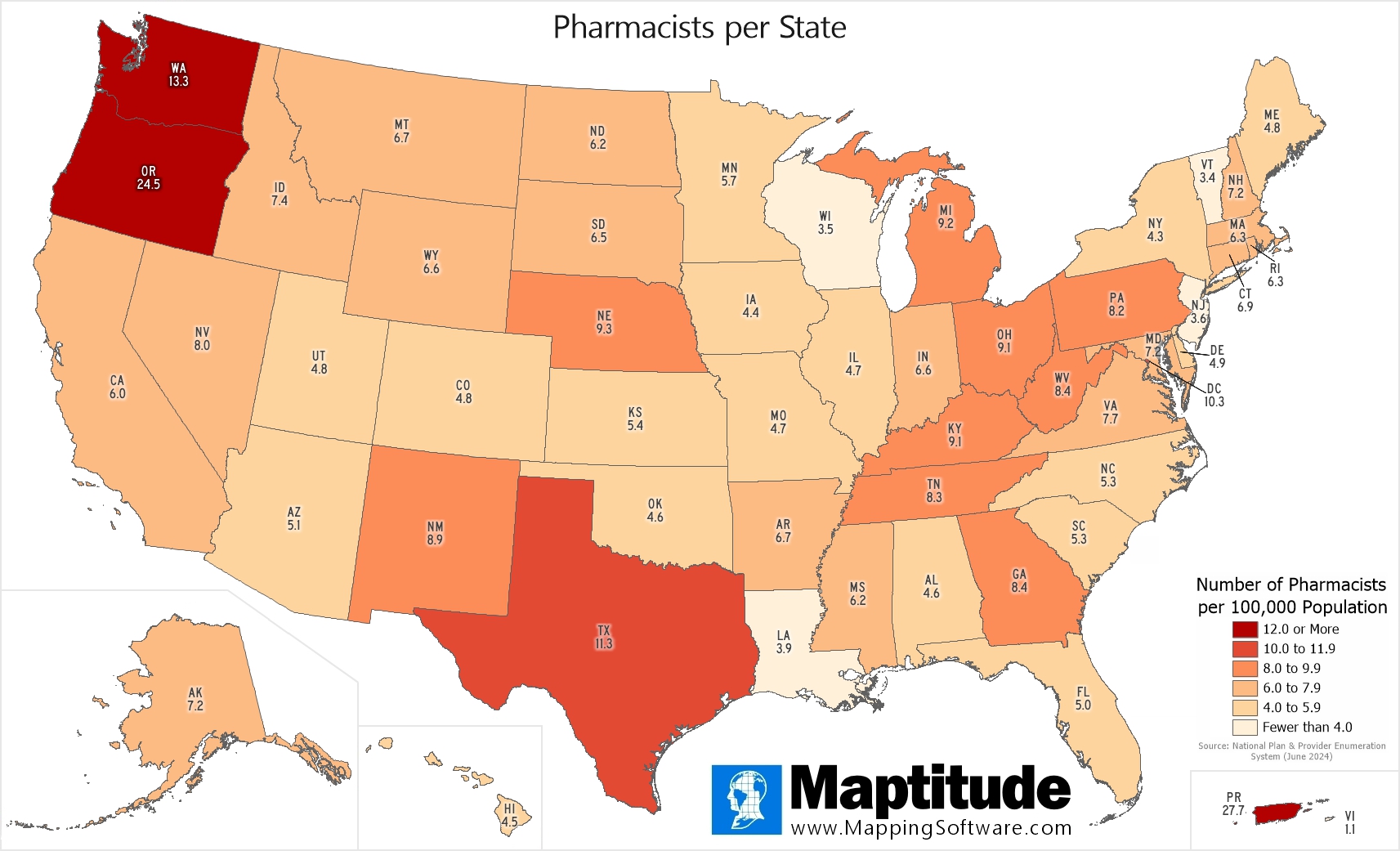
It's National Pharmacist Day! Time to celebrate the great profession that has changed dramatically from dispensing pills to providing expert advice to patients and knowing more about medications than the other doctors who prescribe them. We are proud to have Courtney Kleppinger (D. Pharm., near-Ph.D.) in our family. Courtney is a staff pharmacist at the University of Kentucky Hospital. My tie shows chemical lab equipment and organic chemistry molecules.


Maptitude mapping software infographic of pharmacists by state for January 12 National Pharmacist Day

Maptitude Logo ©Caliper. Maptitude® mapping software.

Tuesday, November 7, 2023

7 November 23

Happy Birthday, Lise Meitner (1878-1968)! She was the frequently overlooked, largely unheralded co-discoverer in some very important developments in radiochemistry, including nuclear fission and the original production of the element protactinium. The article about her in Wikipedia gives you a very nice introduction to her life and work. Albert Einstein recognized the significance of her research by calling her "the German Marie Curie." My tie celebrates chemical formulas and equipment.


Wednesday, October 19, 2022

19 October 22

Every year the third week in October is celebrated as National Chemistry Week! My love for chemistry goes back to experiments with my childhood chemistry set. My tie shows the molecular structures and lab equipment that occupied so much of my attention in high school, college and one year of graduate school -- but I continue to treasure my chemistry background even in my life as a philosopher and instructional technologist! Where does a chemist eat lunch? At his periodic table, of course.

Monday, July 19, 2021

19 July 21

A new holiday for 19 July is National Words With Friends Day, celebrating the launch of that online game in 2009. (I play it a lot!) My chemistry tie for today is primarily a reaction to the 1937 birthday (yesterday) of Roald Hoffman, famous in organic chemistry for studying how the geometry of molecules influences the progress of reactions. He won the Nobel Prize in Chemistry in 1981. Also born on 18 July, in 1635, was Robert Hooke, an English scientist who developed the microscope and also produced "Hooke's Law" that describes the mechanics of oscillating springs. Some molecular model kits use balls for atoms and springs for chemical bonds (because bonds are "stretchy"), so one of my photos (from 2017) shows some ball-and-spring models for formaldehyde (methanal) and benzene. The American philosopher of science Thomas Kuhn was born in 1922, and his theory of "scientific revolutions" can easily be stretched to include the paradigm shifts within chemistry when old ideas about simple linear bonding had to be exploded to include rings and "molecular orbitals." Finally we can celebrate the birthday of astronaut and Senator John Glenn (1921-2016), who was helped into orbit in 1962 through the magic of hydrogen-oxygen combustion.


Monday, August 26, 2019

26 August 19

Wearing my chemistry-lab-equipment-and-formulas tie to honor the birthday of Antoine Lavoisier (1743-1794). He developed the "oxygen theory of combustion," which was one of the pioneering discoveries in the transformation of modern chemistry from its roots in alchemy.

Thursday, March 8, 2018

8 March 18

American chemist James Mason Crafts was born on this date in 1839. He is best known for his work with French chemist Charles Friedel in 1877 to develop the reactions that are known today as Friedel-Crafts alkylation and acylation. The general process of "electrophilic aromatic substitution" is pictured below, although the actual mechanism by which an "R" group (of carbon and hydrogen atoms) gets bonded to a benzene molecule is quite complicated. Alkylation and acylation are among the most basic and frequently-used steps in synthetic organic chemistry.


Tuesday, July 18, 2017

18 July 17

My chemistry tie for today is primarily a reaction to the 1937 birthday of Roald Hoffman, famous in organic chemistry for studying how the geometry of molecules influences the progress of reactions. He won the Nobel Prize in Chemistry in 1981. Also born on this date, in 1635, was Robert Hooke, an English scientist who developed the microscope and also produced "Hooke's Law" that describes the mechanics of oscillating springs. Some molecular model kits use balls for atoms and springs for chemical bonds (because bonds are "stretchy"), so my photos show some models for formaldehyde (methanal) and benzene. The American philosopher of science Thomas Kuhn was born on this date in 1922, and his theory of "scientific revolutions" can easily be stretched to include the paradigm shifts within chemistry when old ideas about simple linear bonding had to be exploded to include rings and "molecular orbitals." Finally we can celebrate the birthday of astronaut and Senator John Glenn (1921-2016), who was helped into orbit in 1962 through the magic of hydrogen-oxygen combustion.

Tuesday, February 28, 2017

28 February 17

Today's chemistry tie celebrates the birthday of Linus Pauling (1901-1994), often regarded as "the Father of the Chemical Bond." In the 1920s and 1930s his research led to understandings of molecular bonding that continue to the present. For his scientific work, Pauling was awarded the Nobel Prize in Chemistry in 1954. In 1962, for his peace activism, he was awarded the Nobel Peace Prize. This makes him the only person to be awarded two unshared Nobel Prizes.

Sunday, April 10, 2016

10 April 16

Today marks the birthday of Robert Woodward (1917-1979), Nobel-Prize-winning chemist. His name is most memorable to me from the "Woodward-Hofmann rules" that account for the mechanisms of many organic chemistry reactions.

Sunday, August 9, 2015

9 August 15

Beth helped choose this tie for our 40th anniversary today -- to celebrate our wonderful "chemistry"!

Tuesday, September 2, 2014

2 September 14

Wilhelm Ostwald, creator of the industrial process to make nitric acid, was born on this date in 1853. My tie features lab equipment and chemical molecular formulas. Here is an excellent list of major industrial chemicals.


Tuesday, October 22, 2013

22 October 13

Tomorrow (10-23) is celebrated as "Mole Day" by chemists and their comrades around the world. It honors the "exponential" part of Avogadro's Number, that awesome piece of scientific math-ology that counts the number of atoms (or molecules) in ONE MOLE of an element (or compound). A mole is the amount of "something" that has as many unit particles as there are in exactly 12 grams of carbon-12. The mole concept is essential for understanding how chemists make the measurements needed to write chemical formulas and reaction equations. In my photo you can see 27 grams of aluminum foil, which is 6 X 10²³ atoms of aluminum. (I had to honor Mole Day early this year because I have another special event tomorrow.)

Thursday, February 28, 2013

28 February 13

Take some extra vitamin C today, to honor the 112th birthday of Linus Pauling (1901-1994). He became the "Father of the Chemical Bond" through his pioneering work (around 1930) on molecular geometry and bond strengths. He won the Nobel Prize in Chemistry in 1954. In later years he became famous for promoting large doses of vitamin C as a cure for the common cold, which is now regarded as an ineffective but "mostly harmless" treatment (although it has some benefit for people who do not get enough vitamin C in their diets).

Tuesday, October 23, 2012

23 October 12

It's Mole Day! Quick, get three and a half teaspoons of water (18 ml) or about 56 ordinary small paper clips (56 g). You are looking at (roughly) 6 X 10^23 molecules of water, or 6 X 10^23 atoms of iron. That constant number, which is 602,214 followed by 18 zeros, defines a "mole" of anything, and it expresses one of the fundamental units in chemistry. October 23, which is 10.23 or 10-23 or 10/23, reminds chemists everywhere about "Avogadro's Number." National Chemistry Week is celebrated every October during the week that includes Mole Day.


Tuesday, April 10, 2012

10 April 12

Today's chemistry tie celebrates the birthday (in 1917) of Robert B. Woodward, sometimes honored as the "preeminent organic chemist of the twentieth century" (from Wikipedia). He was awarded the 1965 Nobel Prize in Chemistry for his work on understanding the mechanisms (molecular pathways) for chemical reactions.


Wednesday, January 11, 2012

11 January 12

Today marks 90 years since insulin was first used to treat human diabetes, and also 48 years since the publication of the "Surgeon General's Report" about the health hazards of smoking. So I chose a tie with lots of references to science (including medical research).

Monday, October 24, 2011

24 October 11

Yesterday (10-23) was Mole Day, honored by chemists worldwide because of the wondrous powers of Avogadro's Number, 6.022 X 10²³. That's a "6" followed by 23 digits, and it counts the number of atoms in one mole of any element, such as 12 grams of carbon or 16 grams of oxygen. It's also the number of molecules of H2O in every 18 grams of water, which is a little more than one tablespoon in kitchen measurements. So the number of water molecules you drink from one can of soda is roughly 12,000,000,000,000,000,000,000,000!

October 23 also marks the birthday (in 1875) of Gilbert Lewis, famous for developing the idea of "shared electrons" in chemical bonds.

Thursday, August 26, 2010

26 August 10

Today marks the birthday of:
  • Albert Sabin (8/26/1906 - 3/3/1993); Polish-born American microbiologist; developed oral polio vaccine (through collaboration with Jonas Salk)
  • Antoine-Laurent Lavoisier (8/26/1743 - 5/8/1794); French scientist; discovered oxygen (but took credit for work by Joseph Priestley)